
I have places I want to go in my business. My clients have places they want to go in theirs. We have already gotten to many of them, but there is always yet more on the horizon. This is a wonderfully expansive and exciting thing, to have yet more you want to build, design, inhabit and share with the world.
It can also be a trap. Full-time future-casting means we’re never fully here right now. Never fully appreciative of what we’ve already built. What already exists because we’ve made it so.
It’s a slippery slope from “and now I want to go here in my work” to “why am I not already there in my work?” to the major time-suck I see my clients engage in that looks something like “and why is she already there and I’m not?”
Comparison creeps in. Planning for Q4 and the year ahead creeps in. We map out all the places we want to go with a mind full of others who got there first and a vow to ourselves that we will get there, too, dammit. No matter what it takes.
There is a reason that Instagram quote “The life you’re living now is the one you dreamed of ten years ago” is so popular and shared ad nauseam. Annoyingly, it’s true.
You built your business so you could be standing exactly where you are. Look around you. See the fruits of your labor. Appreciate what your business provides to your customers, to your team, to you.
And maybe — maybe — where you are is not ideal. Maybe it’s not enough revenue just yet. Maybe you’re in a challenging season of scaling and growth. Maybe you’re working too many hours and need more balance so your business fits better in the rest of your life. But maybe also: where you are is excellent. It’s good. It’s better than good. It’s solid enough that if you hung out right here for a bit (a quarter, a year, maybe three), you’d be fine. More than fine. Maybe, even, great.
You know how I feel about growth for growth’s sake. Not all businesses need to be on the hamster wheel of ever greater growth year over year over year. It’s madness. It’s not necessary. And it’s likely making you feel really crummy. It’s definitely preventing you from enjoying the magic of right now.
But there is also tremendous power and tremendous agency in pausing for a moment to not just appreciate how far you’ve already come, but asking yourself: What if I have already arrived somewhere I haven’t allowed myself to call successful?
Maybe your business does grow from here. Maybe there is another chapter you’re genuinely excited to build. But before deciding that, you need an accurate accounting of what already is.
Without this perspective, every plan begins from perceived deficiency: not enough revenue, not a big enough audience, not enough scale, not enough recognition. Not there yet.
What I want instead is: This is good! I built this! And from this good place, I would now like to build that.
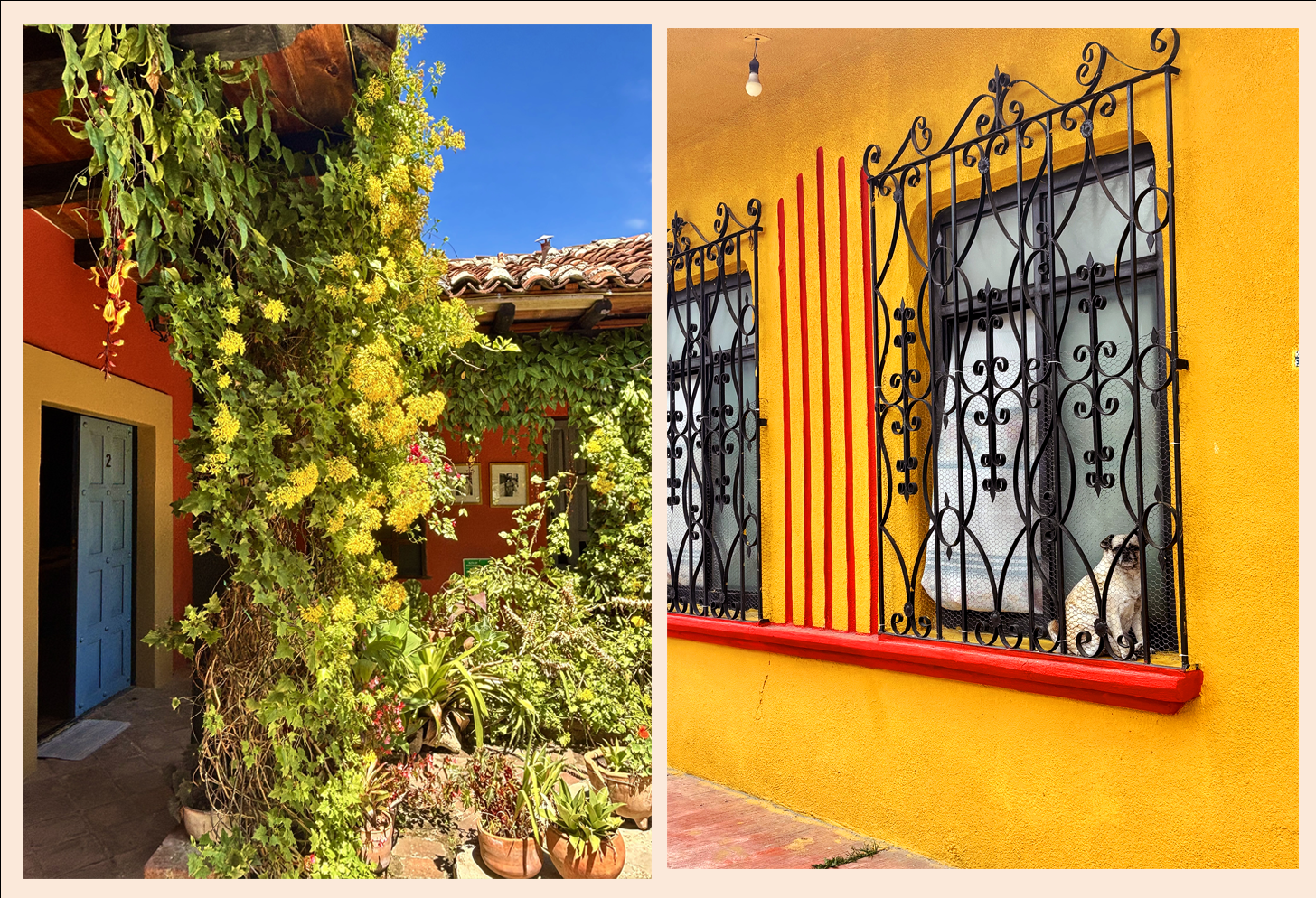
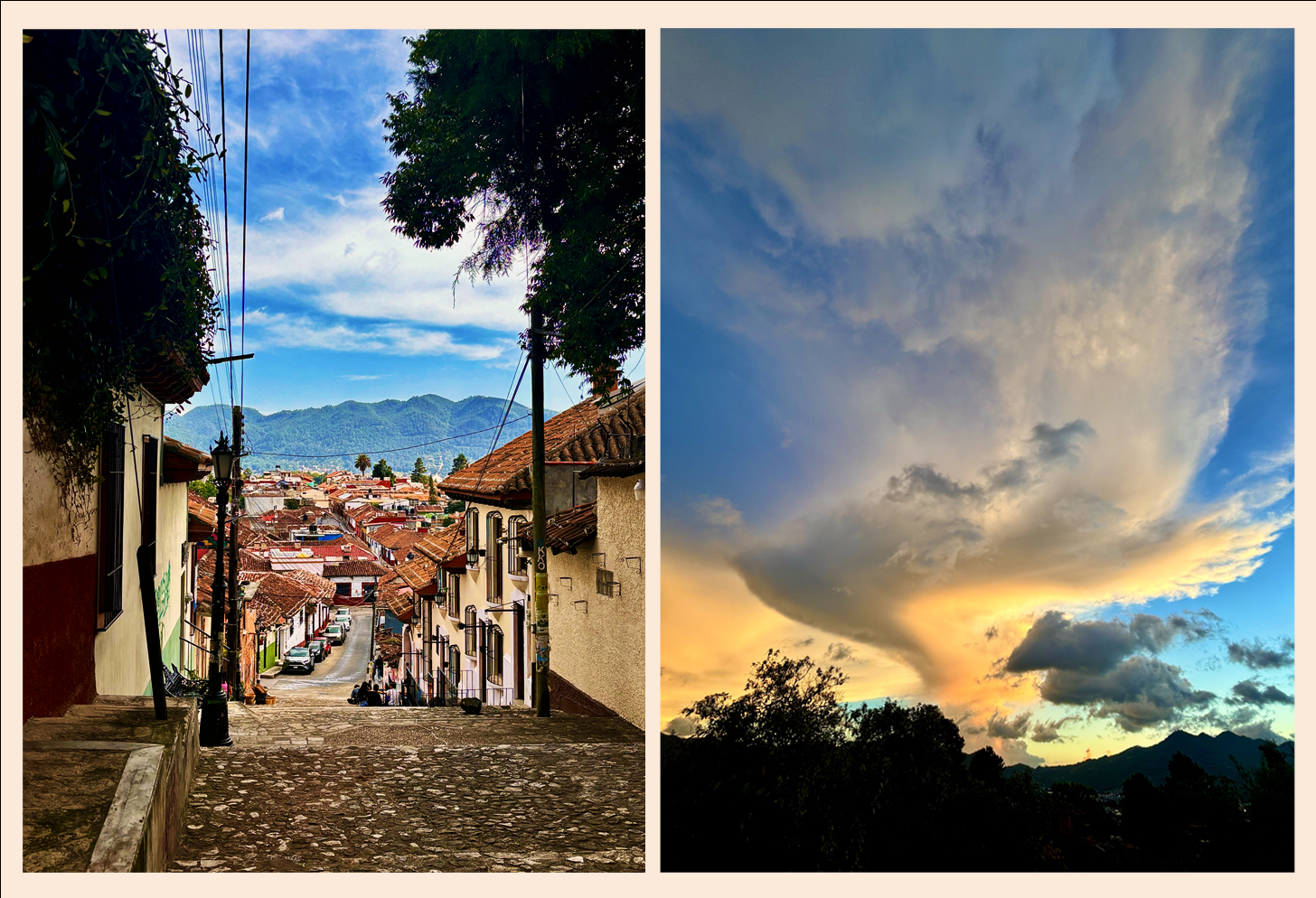
As you know, I live most of the year in Mexico. In dreamy San Cristobal de las Casas which has particular poignancy for me. And sometimes living in another country presents challenges. Language barriers, being understood barriers, cultural barriers, how things work barriers. It’s part of the wonder, it’s part of the learning, it’s part of the work to be mindful and respectful of the culture you’ve decided to participate in.
But as much as we’ve tried to learn over the last six years, the delta between how we know things to work in the States and how things actually work in Mexico is…significant. And every once in awhile we have found ourselves asking: “Is Mexico too challenging for us?” The challenge is often not Mexico. The challenge is that I spent most of my life living in a society for which I had an easy map. I understood the rules. I knew who to call and what was supposed to happen next. Here? Not so much.
Recently, we’ve been having a hell of a time with water. Water pressure. Water temperature. Water coming at all from the city. It has been such a fascinating education in water heaters, water pumps, cisterns, and Tinacos. Here, water is supplied most days (not on Sundays) around 2pm by the city. It rushes into a cistern below the house and a pump pulls this water up from the ground floor into the house. The sinks, the showers, the toilets all get their water from this pump that provides enough pressure to distribute it in the house and also provides enough pressure to trigger the water heater that heats that water.
All good all fine. Until the pump gives out. Or you run out of water in the cistern. Then your backup tank (Tinaco) on the roof of the house kicks in and trickles water down into the house. No pressure. And no pressure means no heat. Which means a slow trickle of water that is very, very cold.
What this month of water shenanigans has made me acutely aware of (new water heater, all good; then the little pump in the cistern died, replaced it with a more powerful one, all good, great hot showers there for a bit; then this morning, no water in the cistern or in the Tinaco and the city water doesn’t deliver again until maybe 2pm, is our new pump too powerful? but then where is all the water going?) is how much infrastructure I spent most of my life never thinking about at all. Water arrived. It arrived with pressure. It was hot when I wanted it hot. I didn’t understand the systems behind any of it because I never needed to. That invisibility was a privilege.
But something else occurred to me while I have been deep in cistern discussions, taking yet more photos of water levels, checking shower pressure and water temperature: I chose this life.
Not the broken pump, obviously. I have never once put “become conversant in water-pressure systems” on a vision board.
But this life. I wanted to live somewhere different enough that I would have to learn. I wanted to know another culture far more deeply than a visitor does. I wanted a slower pace, a deeper relationship with a local community, local farmers, local food, another language. Another way of seeing things. Another way of living.
Ten years ago, I dreamed of exactly this.
And here I am.
I am the Instagram quote.
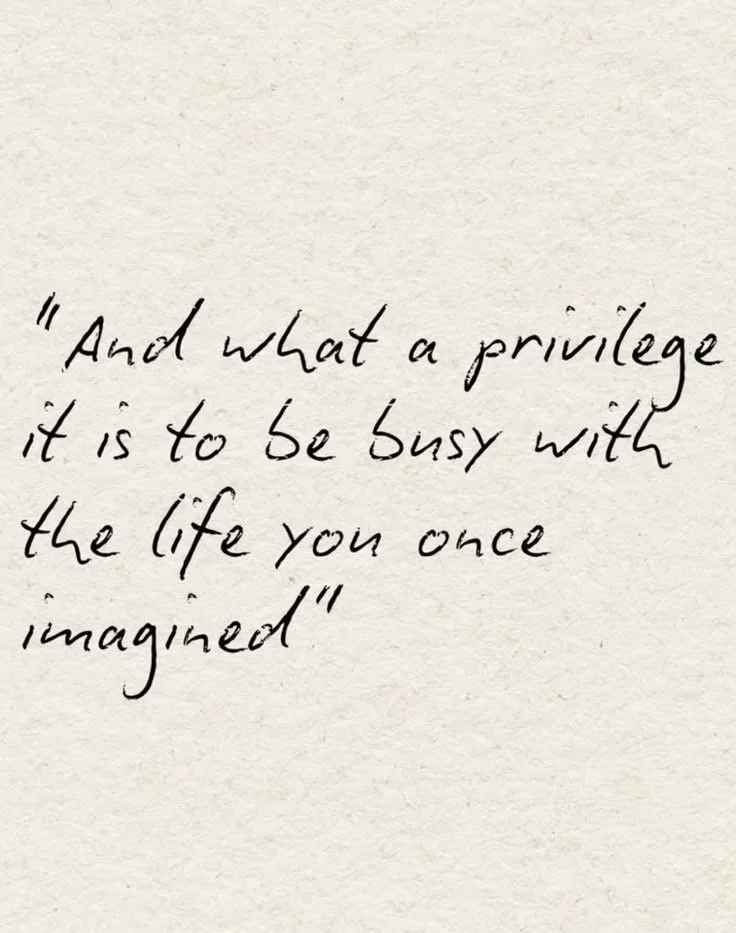
I asked for this. I planned for this. I moved my entire life around and worked very hard for exactly this.
I also realized: we are remarkably bad at recognizing success once it becomes our normal life.
The client roster you once desperately wanted becomes “work.” The revenue you once couldn’t imagine becomes the baseline and you now want more. The team you dreamed of becomes “I am too busy managing my people and don’t have time to create.” Your “I don’t want any meetings at the beginning of the week” is now your regular Monday and Tuesday. What you wanted for so long is, now, literally your new normal.
Because our brains very quickly normalize what exists, we are perpetually moving the definition of “there.” We are always moving our own goal posts. And: our definition of success can automatically expire the moment we achieve it.
So let’s notice it. Let’s appreciate it. Let’s enjoy it. Let’s acknowledge the distance we ran from there ten years ago to here right now.
Here. Right. Now.
I see my clients often skipping this most important step in their businesses. I catch myself doing it, too. What’s next? When will I finally get there? My competitors are already there, what is wrong with me?
To have goals and dreams for your work - for its reach, its impact, its ability to change your life and provide for your family - is deeply important. Yet I so often find that in the striving to achieve these dreams, we forget that we are already living inside of them.
And there is a business consequence to never believing where you are is enough. You start making decisions from the assumption that something must be fixed. Another hire. Another offer. Another agency. More marketing. A rebrand. A new platform. More content. More growth. Not necessarily because the business needs any of it, but because standing still long enough to ask whether what you’ve already built is actually quite good can feel almost irresponsible when everyone around you appears to be racing toward the next thing.
I invite you to look around. Survey your gardens. See how many blooms grow in them now vs five years ago. Ten years ago. I invite you to look at that first P&L. That first year of revenue. Those early products, those early services. That first team member that perhaps wasn’t ideal but helped you get started and wore all the hats. Look at how far you’ve come. Not so you can stop wanting things or convince yourself where you are right now is super fun or where you ultimately want to go. Not so you can abandon whatever you very much know you want to build next. Just long enough to see clearly what is already here.
Can you appreciate what you’ve built as you continue to build?
And from here - not from comparison, not from impatience, not from the assumption that where you are isn’t enough - can you decide how much further you actually want to go?